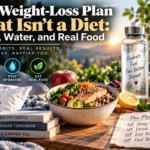
Keto. Paleo. Low-fat. Intermittent fasting. Points. Shakes. Every few years a new diet promises to be the one that finally works.
Look closely at almost any of them and you’ll find the same instruction in the fine print: drink plenty of water. Some add: get enough sleep.
That’s not a coincidence. Those two free habits may be doing more of the work than the diet itself.
Why Most Diets Fail
Most diets don’t fail because people lack willpower. They fail because people are fighting their own biology: constant hunger, cravings, low energy, and a brain that keeps pushing them toward the pantry.
Sleep and water go straight at those problems. When they’re handled, eating less stops feeling like a daily battle.
Part 1: Sleep, Your Hunger Control Switch
If you’ve read our article on sleep as the most important free health hack, you know sleep affects almost everything. Weight is near the top of the list.
Sleep controls your hunger hormones. When you’re short on sleep, your body makes more ghrelin (the hormone that says “eat”) and less leptin (the one that says “you’re full”). You feel hungrier, and it takes more food to feel satisfied.
Tired brains crave junk. Sleep loss makes high-calorie, sugary, salty foods more appealing and weakens the part of your brain that says “maybe not.” That’s why the late-night snack run happens when you’re exhausted, not when you’re rested.
The research is striking:
- In a 2022 study, overweight adults who normally slept less than 6.5 hours were coached to sleep about an hour longer. They got no diet instructions at all, yet they ate roughly 270 fewer calories a day on average. Over a year, that adds up to a meaningful amount of weight.
- In another study, people on the same reduced-calorie diet lost about half as much fat when they slept 5.5 hours a night instead of 8.5. More of the weight they did lose came from muscle, which is exactly what you don’t want to lose.
In other words, short sleep makes you eat more, and it makes any diet you’re on work worse.
Your goal: 7 to 9 hours a night. A consistent wake time and morning sunlight are the two easiest ways to get there.
Part 2: Water, the Simplest Swap You’ll Ever Make
The biggest win: what water replaces
This is the part most people underestimate. A 20-ounce soda has about 240 calories. Sweet tea, juice, sports drinks, and specialty coffee drinks can carry just as many or more. Your body doesn’t register liquid calories the way it registers food, so you don’t eat less later to make up for them.
Replace two sugary drinks a day with water and you may cut close to 500 calories without changing anything on your plate. For many people that alone is enough to start losing weight.
A glass before meals
Studies have found that drinking about 16 ounces (500 ml) of water before meals helps people eat less and lose a few extra pounds over several months. It takes up room in your stomach and gives your body time to register fullness before you overeat.
Thirsty or hungry?
Many people reach for a snack when they’re actually a little dehydrated. Next time you feel snacky between meals, drink a glass of water and wait 15 minutes. You may find the craving passes.
A note on the “metabolism boost”
You may have read that water speeds up your metabolism. There’s a small effect, but it’s minor. Water helps with weight mainly through fullness and replacing sugary drinks, not by burning fat on its own.
How much water?
A popular rule of thumb is half an ounce of water per pound of body weight. For a 160-pound person that’s 80 ounces a day; for 200 pounds, 100 ounces. It’s not a scientific formula, but it’s a reasonable starting point for most people.
The better day-to-day guide is simpler: your urine should be pale yellow. Dark yellow means drink more. Completely clear all day means you can probably ease up.
You’ll need more when it’s hot, when you exercise, or when you work outside. Coffee, tea, and water-rich foods like fruit, vegetables, and soup count toward your total too.
Important: If you have heart failure, kidney disease, or have been told to limit fluids, follow your doctor’s guidance, not a general rule. And there’s no benefit to forcing down huge amounts of water. More isn’t better beyond what your body needs.
Part 3: Eat Real Food (No Diet Required)
You don’t need a named diet, a meal plan, or an app that makes you log every bite. But what you eat still matters. When you’re rested and hydrated, these basics get much easier:
- Protein at every meal. It’s the most filling nutrient and helps protect muscle while you lose weight. Eggs, fish, chicken, lean meat, Greek yogurt, beans, and cottage cheese all work.
- Fiber from vegetables, fruit, beans, and whole grains. Fiber fills you up and keeps you full longer, especially paired with water.
- Mostly real food. If it comes in a crinkly bag with a long ingredient list, it’s likely engineered to be easy to overeat. Food that looks like it did in nature is harder to overdo.
- Watch the alcohol. It adds calories, lowers your resistance to late-night snacks, and hurts your sleep, which sends you back to Part 1.
Calories still count. There’s no getting around that. But when your hunger hormones are balanced and you’re not drinking hundreds of calories a day, eating a bit less happens almost on its own.
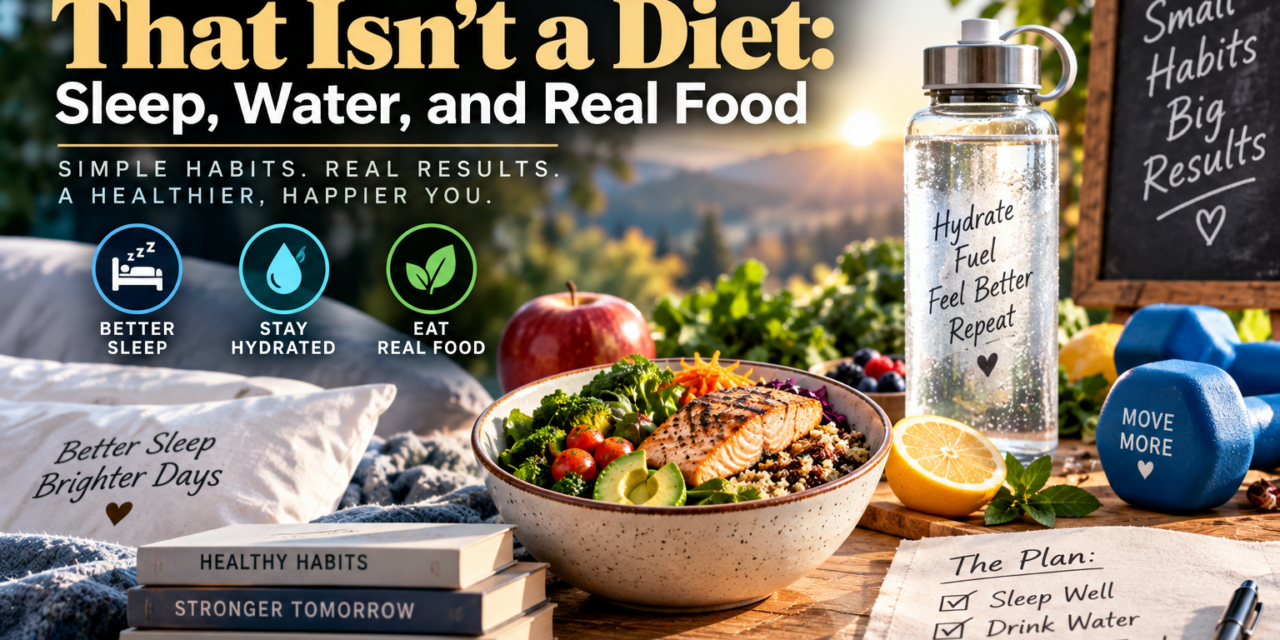
The Plan
- Sleep 7 to 9 hours. Keep the same wake time every day, weekends included.
- Drink water until your urine is pale yellow. Start with about half an ounce per pound of body weight.
- Have a glass of water before each meal.
- Replace sugary drinks with water, or unsweetened tea or coffee.
- Eat protein and vegetables at every meal, and mostly real food.
Bonus: Take a walk every day. It helps with weight, sleep, and nearly everything else.
What to Expect
- The first week or two, the scale may drop quickly. Some of that is water weight, not fat, so don’t be discouraged when it slows down.
- After that, a healthy pace is about 1 to 2 pounds a week. Slower weight loss is more likely to stay off.
- You’ll likely notice other changes first: fewer cravings, more steady energy, better mood, and less afternoon slump.
If you’re doing all of this consistently and the scale isn’t moving after a couple of months, talk to your doctor. Thyroid problems, sleep apnea, certain medications, and other conditions can make weight loss harder.
The Bottom Line
Diets come and go. Sleep and water have been part of every one that worked, and they cost nothing.
Sleep enough, drink enough, replace sugary drinks, and eat mostly real food. You don’t need a fad diet. You need to stop fighting your own hunger hormones.
This article is for informational purposes only and is not medical advice. Talk to your healthcare provider before making major changes to your diet or fluid intake, especially if you have heart, kidney, or other chronic health conditions.