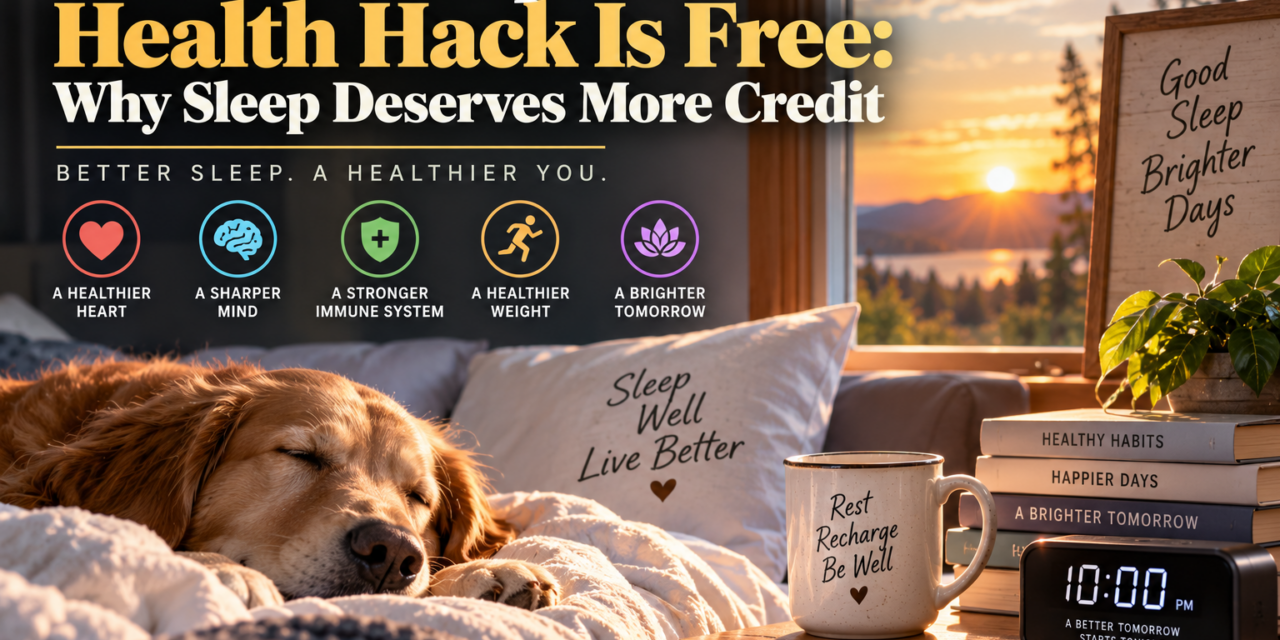
People spend a fortune trying to get healthier: supplements, cold plunges, fitness trackers, red light panels, the latest superfood powder. Meanwhile, the most powerful health tool most of us have costs nothing, takes no equipment, and happens every night.
Sleep.
Sleep Affects Almost Everything
It’s hard to find a part of your health that sleep doesn’t touch. Short sleep over time is linked to:
- Heart disease and high blood pressure
- Type 2 diabetes. Even a few nights of poor sleep make your body worse at handling blood sugar.
- Weight gain. Sleep loss increases the hormone that makes you hungry and lowers the one that makes you feel full. You crave sugar and carbs more when you’re tired.
- A weaker immune system. In one study, people who slept under six hours were about four times more likely to catch a cold after exposure to the virus.
- Depression and anxiety
- Memory problems and dementia risk. Deep sleep is when your brain clears out waste, including proteins linked to Alzheimer’s disease.
- More pain. Poor sleep lowers your pain threshold, so aches feel worse.
- Accidents. Drowsy driving causes thousands of crashes every year.
Good sleep improves all of these. Bad sleep makes all of them worse. No supplement on the market can claim that kind of reach.
How Much Sleep Do You Need?
- Adults 18 to 64: 7 to 9 hours
- Adults 65 and older: 7 to 8 hours
- Teens: 8 to 10 hours
- School-age kids: 9 to 12 hours
Do You Need Less Sleep as You Age?
Not really. Your need for sleep stays about the same through adulthood. What changes is your ability to get it.
As we age:
- Sleep gets lighter. You spend less time in deep sleep and wake up more easily.
- Your body clock shifts earlier. You get sleepy earlier in the evening and wake earlier in the morning.
- More things interrupt the night: bathroom trips, aches and pains, reflux, medications, a partner’s snoring, or your own.
So many older adults aren’t sleeping less because they need less. They’re sleeping less because it’s harder to stay asleep, and they’re paying for it.
How Do Some People Get By on So Little?
You’ve met them: the guy who swears he’s fine on five hours. There are two explanations.
A tiny group really are short sleepers. Researchers have found rare gene variants that let some people feel rested and perform well on 4 to 6 hours a night. It tends to run in families, but it’s estimated at well under 1% of people.
Everyone else has just gotten used to being tired. In a well-known study, people limited to six hours a night for two weeks performed about as poorly on attention tests as people who’d been awake all night. But they rated themselves only slightly sleepy. Your body adapts to feeling tired much faster than to being tired. Most people who say they’re fine on five hours are running impaired without realizing it.
There’s also natural variation in timing. Night owls and morning people are largely wired that way by genetics. A night owl forced onto an early schedule ends up chronically short on sleep, even with good habits.
Want to know your real number? On a vacation with no alarm, after the first few nights of catching up, notice how long you naturally sleep. That’s close to what your body needs.
How to Sleep Better, for Free
In rough order of impact:
1. Wake up at the same time every day, including weekends. This anchors your body clock more than a set bedtime does. Sleeping in on Saturday is like giving yourself mild jet lag.
2. Get morning light. Ten to fifteen minutes outside soon after waking tells your brain when the day started, which makes it easier to fall asleep that night. Cloudy days still count.
3. Cut caffeine earlier than you think. Caffeine’s half-life is around five hours, so a 3 PM coffee is still partly active at bedtime. Aim to stop about 8 hours before bed.
4. Rethink the nightcap. Alcohol helps you fall asleep but breaks up sleep in the second half of the night. It’s one of the most common hidden causes of poor sleep.
5. Make the bedroom cool, dark, and quiet. Around 65°F works for most people. Blackout curtains and a fan or white noise machine are cheap upgrades.
6. Put the phone away. Screens keep your brain alert, and scrolling keeps you up later than you meant to. Charge it outside the bedroom if you can.
7. Don’t lie in bed awake. If you can’t sleep after about 20 minutes, get up and do something quiet in low light until you’re sleepy. This retrains your brain to link bed with sleep, not tossing and turning.
8. Keep naps short. Twenty to thirty minutes in the early afternoon. Longer or later naps steal from your night.
If You Snore, Read This
Loud snoring, waking up gasping, high blood pressure, or feeling exhausted despite a full night in bed can all be signs of sleep apnea, where your breathing repeatedly stops during the night.
It’s very common, especially in men over 50, and most people who have it don’t know. Untreated, it’s linked to heart disease, stroke, and drowsy driving. No supplement or sleep habit fixes it, but treatment works, and testing is simpler than ever. Many people can now do a sleep test at home. If your partner complains about your snoring, take it seriously.
For Long-Term Insomnia
If you’ve had trouble sleeping for months, the most effective treatment isn’t a pill. It’s cognitive behavioral therapy for insomnia (CBT-I), a short, structured program that retrains your sleep habits and thinking. It works better than sleep medication over the long term, and there are good app-based versions now. Ask your doctor.
What About Natural Sleep Supplements?
Supplements can help a little, but they should come after the free steps above, not instead of them. Here’s how the popular ones stack up:
Magnesium: a reasonable first choice. The evidence is modest and strongest in older adults and people low in magnesium. Magnesium glycinate is the form easiest on the stomach. Skip it if you have kidney disease.
Melatonin: useful, but often misused. It works best for resetting your body clock (jet lag, shift work, night owls) rather than as a knockout pill. Most store doses of 5 to 10 mg are far more than needed; 0.5 to 3 mg taken a couple of hours before bed often works better. Quality varies a lot. One study found actual melatonin content ranged from far below to several times above the label. Look for a USP-verified brand.
L-theanine and glycine: small studies suggest they may help with relaxation and sleep quality. Low risk.
Tart cherry: small studies, mild effect, but it’s a food, so the downside is minimal.
Valerian: the research is mixed, and there are rare reports of liver injury.
Ashwagandha: some evidence for sleep and stress, but it’s been linked to rare cases of liver injury. (See our article on supplements and your liver.)
Chamomile tea: a fine bedtime ritual for most people, but not if you have ragweed allergies. (See our fall allergies article.)
Skip the “PM” products
ZzzQuil, Benadryl, Tylenol PM, and Advil PM rely on diphenhydramine, an antihistamine that can cause next-day grogginess and confusion, and raises the risk of falls in older adults. Long-term use has been linked in studies to higher dementia risk. Tylenol PM also adds acetaminophen, which your liver doesn’t need every night.
Before you try any sleep supplement
- Check for interactions. Melatonin and magnesium can interact with some medications, including blood thinners and blood pressure drugs. Ask your pharmacist.
- Choose third-party tested brands (USP or NSF seal).
- Try one at a time, at the lowest dose, so you know what’s working.
- If you need something every night for more than a few weeks, talk to your doctor about what’s causing the problem.
The Bottom Line
We look for health in bottles and gadgets while the most effective tool is already built in. Set a consistent wake time, get morning light, move your caffeine earlier, go easy on evening alcohol, and take snoring seriously.
It’s free, it improves nearly every part of your health, and you already have what you need to start tonight.
This article is for informational purposes only and is not medical advice. Talk to your healthcare provider about ongoing sleep problems, snoring, or before starting any supplement, especially if you take prescription medications.