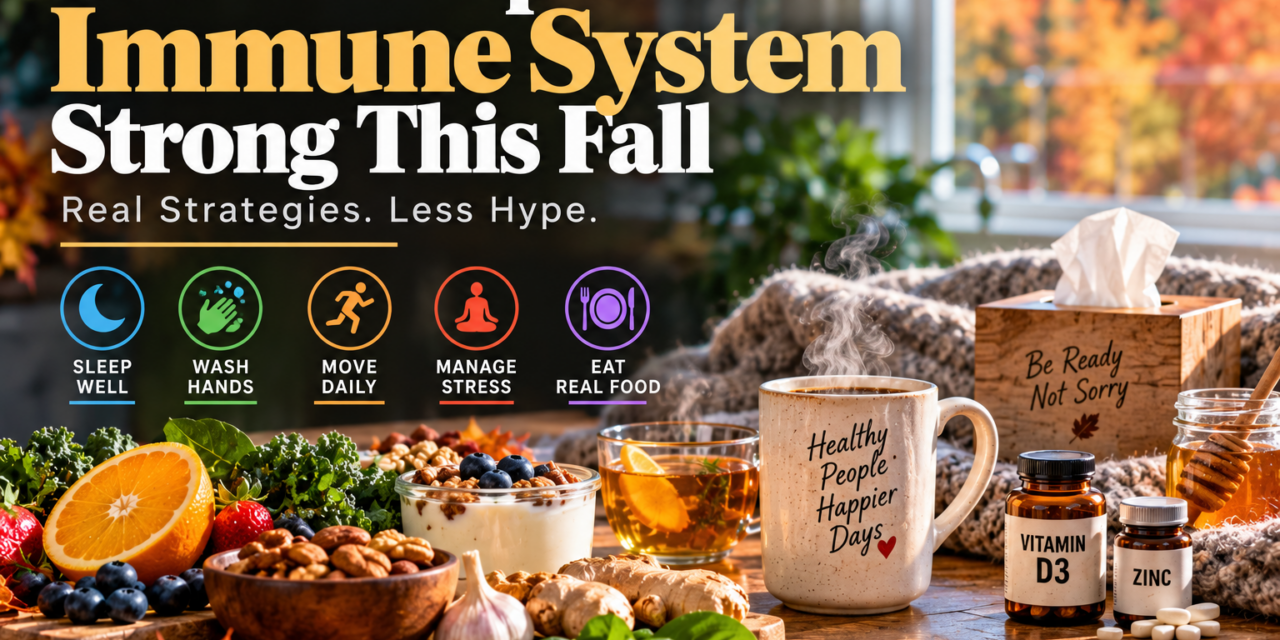
Every fall the ads start: immune-boosting gummies, shots, teas, powders. Take this and you won’t get sick all winter.
Here’s the truth: you can’t push your immune system above normal, and you wouldn’t want to. An overactive immune system is what causes allergies and autoimmune disease. What you can do is stop the everyday habits that wear it down, and give it what it needs to work the way it’s supposed to.
The good news is that the things that work best are mostly free.
The Big Four (What Works Best)
1. Sleep
If you do only one thing on this list, make it this one. In one well-known study, researchers exposed volunteers to a cold virus. People who slept less than six hours a night were about four times more likely to get sick than those who slept seven or more.
Sleep is when your body builds up key parts of its immune response. Cut it short and you’re going into flu season with a weaker defense.
- Adults: 7 to 9 hours
- School-age kids: 9 to 12 hours
- Teens: 8 to 10 hours (most get far less)
Keep a consistent bedtime, keep screens out of the bedroom, and treat sleep as the health habit it is.
2. Wash your hands, the right way
It’s not glamorous, but it’s one of the most effective ways to prevent colds and flu. Most respiratory viruses reach you through your hands: touch a doorknob, touch your face, and you’re infected.
- Use soap and water for at least 20 seconds (about two rounds of “Happy Birthday”).
- Wash when you get home, before eating, and after blowing your nose.
- Keep hand sanitizer (at least 60% alcohol) in the car and backpacks for when there’s no sink.
- Teach kids to cough and sneeze into their elbow.
3. Move every day
Regular, moderate exercise such as walking, biking, or yard work is linked to fewer respiratory infections and milder illness. You don’t need intense workouts. Consistency matters far more than intensity, and extreme endurance training without enough recovery can actually leave you more vulnerable for a while.
4. Manage stress
Chronic stress raises cortisol, and over time that suppresses immune function. It’s no coincidence people often get sick right after a stressful deadline or during the holidays. Walks, time outside, prayer or meditation, time with people you like, and fewer late nights all count.
Eat for Your Immune System
There’s no single “immune food.” Your immune system runs on overall good nutrition.
- Vegetables and fruit, lots of color. They provide vitamin C, vitamin A (from beta-carotene), folate, and other nutrients immune cells need.
- Protein at every meal. Your body uses it to build antibodies and immune cells. Eggs, fish, poultry, beans, Greek yogurt, and nuts all count.
- Fiber and fermented foods. A large share of your immune system is in your gut. Beans, oats, vegetables, yogurt, kefir, sauerkraut, and kimchi all help keep gut bacteria healthy.
- Less added sugar and alcohol. Heavy drinking in particular weakens immune defenses.
Supplements: What the Evidence Says
This is where most of the money gets spent, and where the gap between marketing and research is widest.
Vitamin D: worth considering. Vitamin D levels drop in fall and winter as we spend less time in the sun, and many people are low. Research suggests daily vitamin D supplementation modestly reduces the risk of respiratory infections, with the biggest benefit in people who are deficient. Ask your doctor for a blood test to check your level. More isn’t better, and vitamin D builds up in the body.
Zinc: helpful for some people. Some studies show zinc lozenges taken within 24 hours of the first cold symptoms may shorten a cold. Other reviews find the evidence less certain. Side effects include a bad taste and nausea, and long-term high doses can deplete copper. Avoid zinc nasal sprays and swabs. Some have been linked to permanent loss of smell.
Vitamin C: less than you’ve heard. For most people, taking vitamin C regularly doesn’t prevent colds, though it may shorten them slightly. The exception is people under heavy physical stress, such as marathon runners, who may see more benefit. Starting vitamin C after you already feel sick doesn’t seem to help much. Oranges, peppers, strawberries, and broccoli cover the basics.
Probiotics: promising but not proven. Some research suggests probiotics may slightly reduce respiratory infections, but the studies vary widely in quality and in the strains used. Fermented foods are an easier, cheaper place to start.
Elderberry: limited evidence. A few small studies suggest it may shorten flu symptoms, but the research is thin. It’s generally safe as a syrup from a reputable brand. Never use raw elderberries, bark, or leaves. Uncooked, they can cause nausea and vomiting.
Echinacea: mixed results, and a warning. Studies go both ways on whether it helps. If you have fall allergies, echinacea is in the same plant family as ragweed and can make symptoms worse. (See our article on fall allergies and chamomile.)
A word of caution: More supplements isn’t better. Some popular ones, including high-dose turmeric and green tea extract, have been linked to liver problems (see our article on supplements and your liver). Buy third-party tested brands, stick to label doses, and tell your doctor what you take.
Around the House
- Keep indoor humidity between 40% and 60%. Dry winter air from heating dries out the lining of your nose, one of your first lines of defense. Flu viruses also survive longer in dry air. A humidifier helps, but clean it regularly so it doesn’t grow mold.
- Clean the high-touch spots. Doorknobs, light switches, remotes, phones, and faucet handles are where germs spread.
- Stay home when you’re sick, and keep sick kids home. It’s the simplest way to keep one cold from becoming the whole household’s cold.
- Don’t smoke or vape. Both damage the lining of your airways and make respiratory infections more likely and more severe.
For the Kids
- Protect their sleep. It’s the most important thing on this list for them too.
- Honey for coughs: a spoonful before bed may ease a child’s nighttime cough and help them sleep, and some studies suggest it works as well as over-the-counter cough medicine. Never give honey to babies under 1 year old because of the risk of infant botulism.
- Don’t give adult supplements to children. Check with your pediatrician first, and store gummy vitamins out of reach. Kids treat them like candy, and too much iron or vitamin A can be dangerous.
When to Call a Doctor
Most colds pass in a week to 10 days. Get care right away for:
- Trouble breathing or shortness of breath
- A high fever that won’t come down, or any fever in a baby under 3 months
- Chest pain or pressure
- Confusion or unusual drowsiness
- Signs of dehydration (very little urine, no tears in a crying child)
- Symptoms that improve and then suddenly get worse
The Bottom Line
Your immune system doesn’t need a boost. It needs you to stop working against it. Sleep enough, wash your hands, move every day, manage stress, and eat real food. Add vitamin D if you’re low, keep zinc lozenges on hand for the first sign of a cold, and be skeptical of anything promising to keep you from ever getting sick.
It’s not flashy, but it’s what works.
This article is for informational purposes only and is not medical advice. Talk to your healthcare provider before starting any supplement, especially for children, pregnant women, or anyone taking prescription medication.