Your liver handles hundreds of jobs: it filters your blood, processes nutrients, clears out medications, and breaks down alcohol. It’s also quiet. Liver trouble usually causes no symptoms until it’s well advanced.
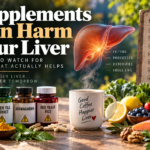
Most people know alcohol is hard on the liver. Fewer know that some of the supplements sold for “wellness” in the natural health aisle can be too. Here’s what to watch for, and what actually supports liver health.
The Supplements to Be Careful With
“Natural” doesn’t mean harmless. Supplements are the second most common cause of drug-related liver injury in the U.S., and they aren’t tested for safety or purity before they’re sold.
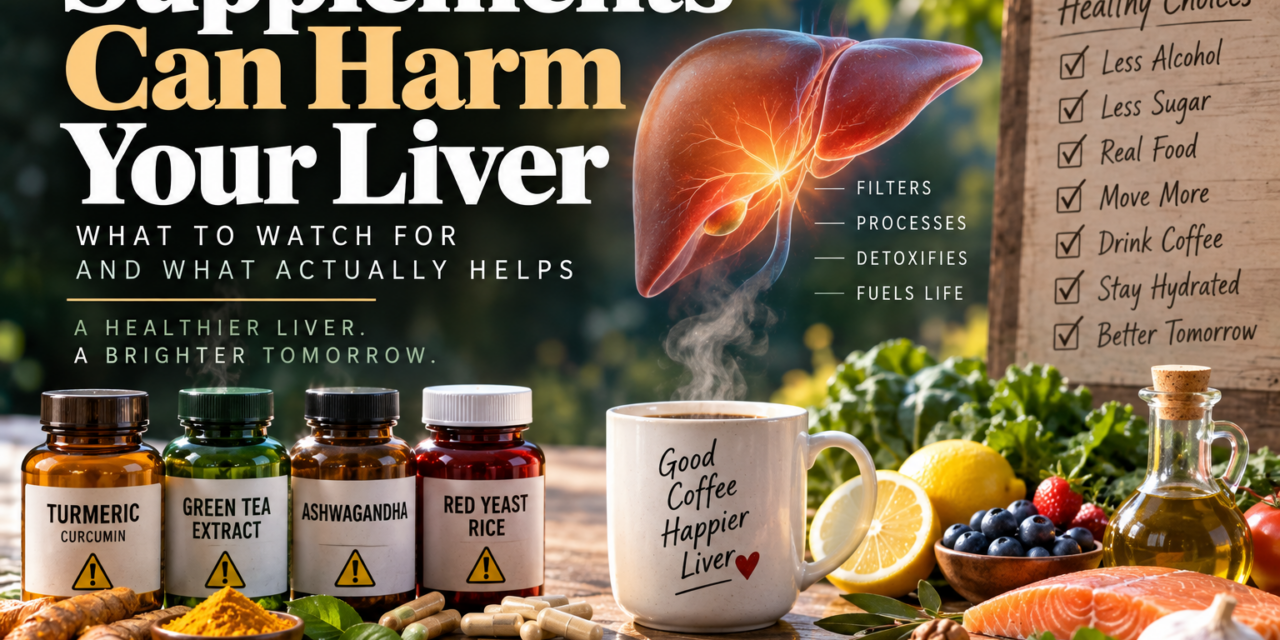
Turmeric/curcumin. Cooking with turmeric is fine. Concentrated supplements are another matter, and there’s a growing number of reported cases of liver injury linked to them. Many of those involve high-absorption formulas that add black pepper extract (piperine) to push more curcumin into your bloodstream. More absorption isn’t always better.
Green tea extract. Drinking green tea is fine. Concentrated extracts, often sold for weight loss or energy, pack far more of the active compound (EGCG) than you’d ever get from a cup, and high doses have been linked to liver damage. The risk appears higher when taken on an empty stomach.
Ashwagandha. Popular for stress and sleep, it has been linked to rare but sometimes serious cases of liver injury. Rare isn’t never, especially if you take it daily for months.
Red yeast rice. Sold as a natural cholesterol fix, it contains monacolin K, which is chemically the same as the prescription statin lovastatin. That means it carries statin-like risks, including to the liver, without a doctor monitoring you.
Garcinia cambogia and kava. Both have been tied to cases of liver injury. Kava in particular has a long enough track record that several countries restricted it for a time.
Vitamin A. Your body stores excess vitamin A in the liver, and too much over time causes damage. The upper limit for adults is 10,000 IU a day of preformed vitamin A, the kind in retinol, retinyl palmitate, and fish liver oils. Beta-carotene from carrots and sweet potatoes doesn’t carry the same risk. If you take a multivitamin plus a separate vitamin A or cod liver oil supplement, add it up.
The bottom line on supplements: Buy from brands that use third-party testing (look for the USP or NSF seal), stick to label doses, and tell your doctor everything you take, including the “natural” stuff.
The Other Common Culprits
Alcohol
Alcohol is still the best-known liver toxin. Even regular moderate drinking can lead to fat buildup and inflammation, and over years that can progress to scarring (cirrhosis). Your liver puts processing alcohol ahead of its other jobs, and the byproducts damage liver cells.
Acetaminophen (Tylenol)
Acetaminophen is safe at recommended doses, but it’s the leading cause of acute liver failure in the U.S. Most of those cases aren’t intentional. They happen when people stack products without realizing it: a pain reliever, a nighttime cold medicine, and a sinus pill can all contain acetaminophen. With cold and flu season coming, check every label. Drinking alcohol while taking it raises the risk.
Sugar, especially sugary drinks
Fructose, from high-fructose corn syrup and table sugar, is processed almost entirely by the liver, and a lot of it gets turned into fat. Regular sodas, sweet tea, and processed snacks are major drivers of what’s now called MASLD (metabolic dysfunction-associated steatotic liver disease, formerly known as non-alcoholic fatty liver disease, or NAFLD). It’s now the most common liver condition in the country, affecting tens of millions of Americans, and most of them don’t know they have it.
Fried food and fast food
A diet heavy in fried food, fast food, and processed meats contributes to weight gain and fat buildup in the liver. It’s less about any single meal and more about the pattern.
PFAS (“forever chemicals”)
PFAS are synthetic chemicals found in some fast food wrappers, microwave popcorn bags, and older non-stick cookware. Research has linked higher PFAS exposure to elevated liver enzymes and fatty liver. The research is still developing, but cutting exposure is easy: skip microwave popcorn bags, replace scratched non-stick pans, and cook in cast iron or stainless steel.
Don’t Wait for Symptoms
Many people watch for fatigue or abdominal pain as warning signs. The problem is that fatty liver and early liver disease usually cause no symptoms at all. By the time you notice something, the damage can be significant.
The best early warning is a simple blood test. A liver panel is part of most routine checkups, so ask your doctor about your results.
See a doctor promptly if you notice yellowing of the skin or eyes (jaundice), dark urine, pale stools, swelling in the abdomen or legs, or pain in the upper right side of your abdomen.
What Actually Supports Your Liver
Your liver already cleans itself. It doesn’t need a juice cleanse or a detox kit. It needs you to stop overloading it and give it the basics.
Drink coffee
This one surprises people. Coffee has some of the strongest evidence of any food or drink for liver health. Regular coffee drinkers have lower rates of cirrhosis, liver cancer, and liver disease overall. Plain coffee or with a little milk is best. A caramel drink loaded with sugar works against you.
Lose some weight if you need to
If you carry extra weight, losing even about 5% of your body weight can noticeably reduce liver fat. Losing 7 to 10% can reduce inflammation and even improve early scarring. For MASLD, nothing else comes close.
Move
Regular exercise reduces liver fat even without weight loss. Walking counts. So does strength training. Consistency matters more than intensity.
Eat like the Mediterranean
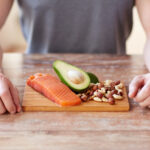
The eating pattern with the best evidence for liver health is the Mediterranean diet: vegetables, fruit, beans, whole grains, fish, nuts, and olive oil, with little red meat, processed food, or added sugar. Foods worth making regulars:
- Leafy greens and cruciferous vegetables (spinach, kale, broccoli, Brussels sprouts) for fiber and nutrients
- Olive oil and walnuts for healthy fats
- Berries for antioxidants
- Garlic and turmeric in cooking (the spice in your food, not the pills)
- Green tea as a drink, not an extract
Cut back on alcohol and added sugar
These are the two biggest dietary changes you can make, and both take pressure off your liver right away.
Water and lemon
Staying hydrated supports every organ, including your liver. Lemon water is a fine habit and a good way to replace soda, but it won’t “flush” toxins on its own.
A note on grapefruit
Grapefruit is healthy, but it interacts with many common medications, including several statins, blood pressure drugs, and anti-anxiety medications, by changing how your liver processes them. If you take any prescription drugs, check with your pharmacist before adding grapefruit to your routine.
What about milk thistle?
It’s the most popular liver supplement, and its active compound, silymarin, has been studied for decades. The results are mixed, with no clear proof it prevents or treats liver disease. It’s generally well tolerated, but don’t treat it as a substitute for the habits above.
Protect yourself from hepatitis
- Get vaccinated against hepatitis A and B if you haven’t been.
- Get tested for hepatitis C. The CDC recommends every adult be tested at least once. It can cause no symptoms for decades, and today it’s curable.
The Bottom Line
The best liver “cleanse” is not overloading your liver in the first place. Watch your supplements as closely as you watch your drinks, check acetaminophen labels, cut the sugar, drink your coffee, and get a blood test so you know where you stand.
Your liver will do the rest.
This article is for informational purposes only and is not medical advice. Talk to your healthcare provider before starting or stopping any supplement or medication, and about testing if you have concerns about your liver.